Meet the Farmers and Cooks
The farmers and cooks behind your food: Jem and S.E.
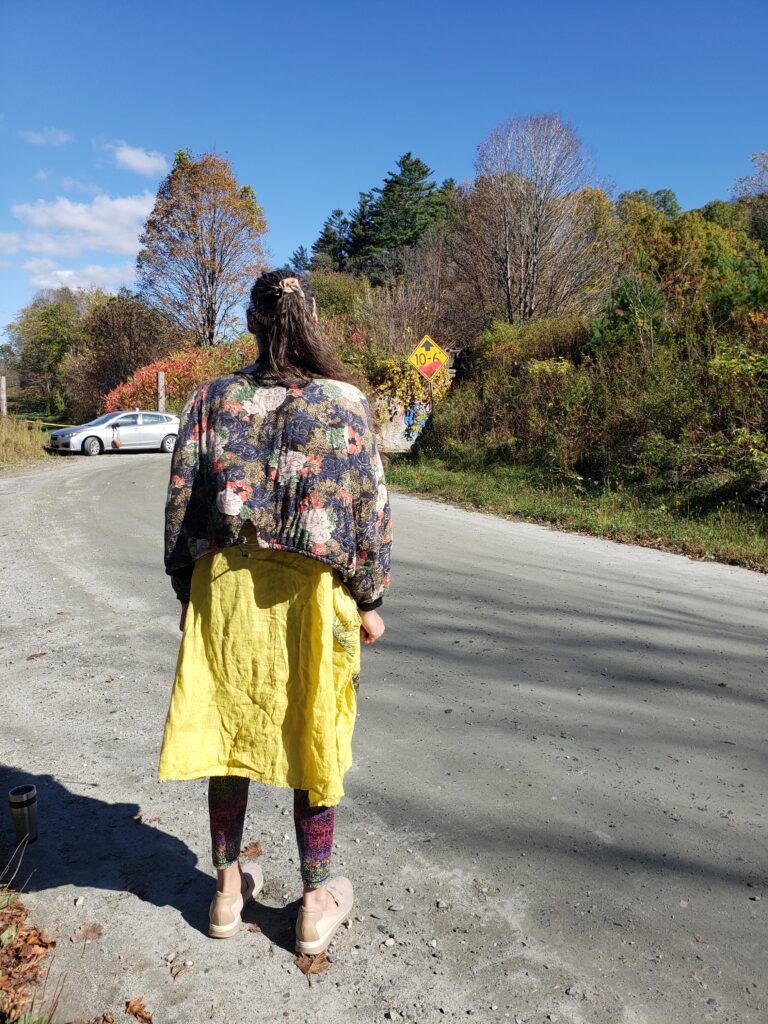
While Jem was managing elementary school vegetable gardens in Denver Public Schools during 2021, she started a small weekly supper club delivery to share in the community of food, remotely. It was designed to support meals for neighbors with food insecurity in the community as well, and fed 20 people a week while being cost-neutral. A fire lit, she attended culinary school, and then became a culinary instructor, specializing in slow-cooking techniques of smoking, braising, slow-roasting, and sauce-making, while planning and maintaining a drip-irrigated rooftop vegetable garden in downtown Denver. In her daily classes, she developed a passion for helping home cooks learn the confidence to use whole ingredients and substitute local ingredients in their cooking. Additionally, she trained culinary students (future chefs!) on fermentation techniques and their applications in the professional kitchen with a focus on global foodways.
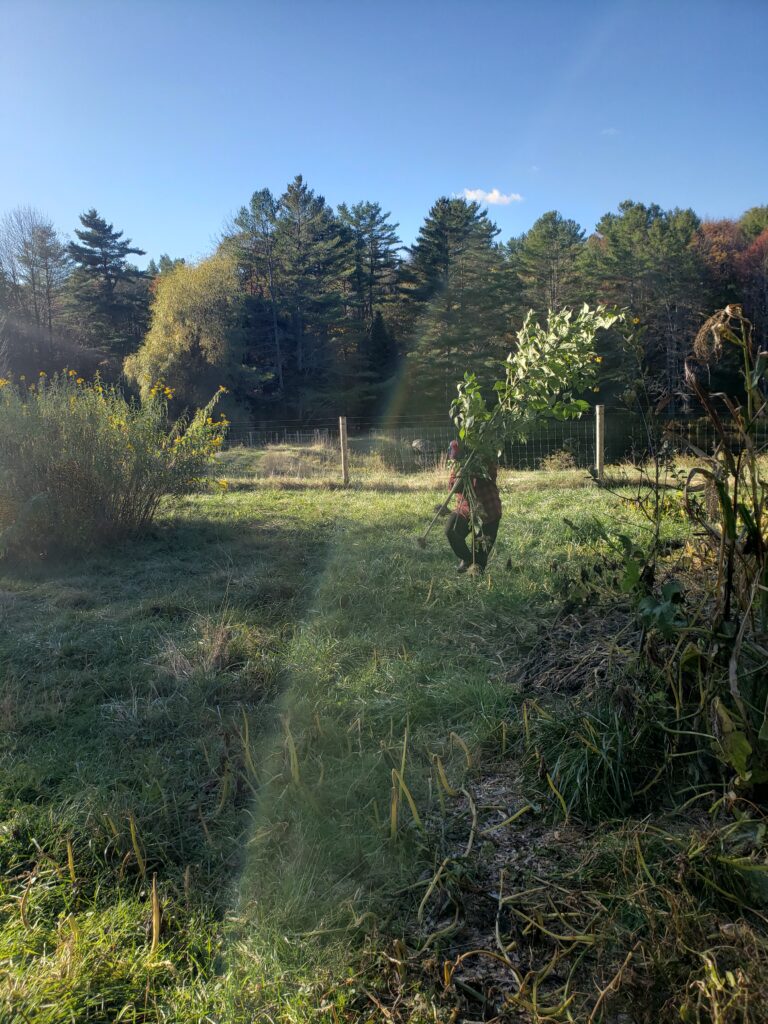
At the time of the supper club, S.E. had just spent a few years managing our community’s food pantry, serving 30,000 residents, many living in a true food desert. They also revitalized a community garden plot and greenhouse, facilitating vegetable garden giveaways to neighbors looking to try growing their own food while expanding traditional food pantry services to reach more of the community. They taught workshops on composting, mulching, seed starting, and natural pest intervention. Since moving to Vermont, S.E. has captured more than bold flavor in their wild-fermented vinegars (and wines), having reconnected with their Irish roots and culturing a traditional buttermilk plant to make Irish farm style buttermilk. Our baked goods are infused with sourdough, kefir, or farm cheese, and even our soft drinks are homemade, often with some extra bread!
We started urban farming together in 2011 on a fire escape, and kept going in rentals, and in earnest at our first home built in 1956 on a former landfill in Northeast Park Hill in Denver. We learned how to grow plants with limited water, air pollution, hard soil conditions, and almost no canopy. Using ancient techniques of adding and waiting…and adding…and waiting, we were able to bring incredible diversity to our 6,000 sqft plot, with hundreds of perennials flowering and fruiting, and hundreds of pounds of vegetables coming out of rotating beds.
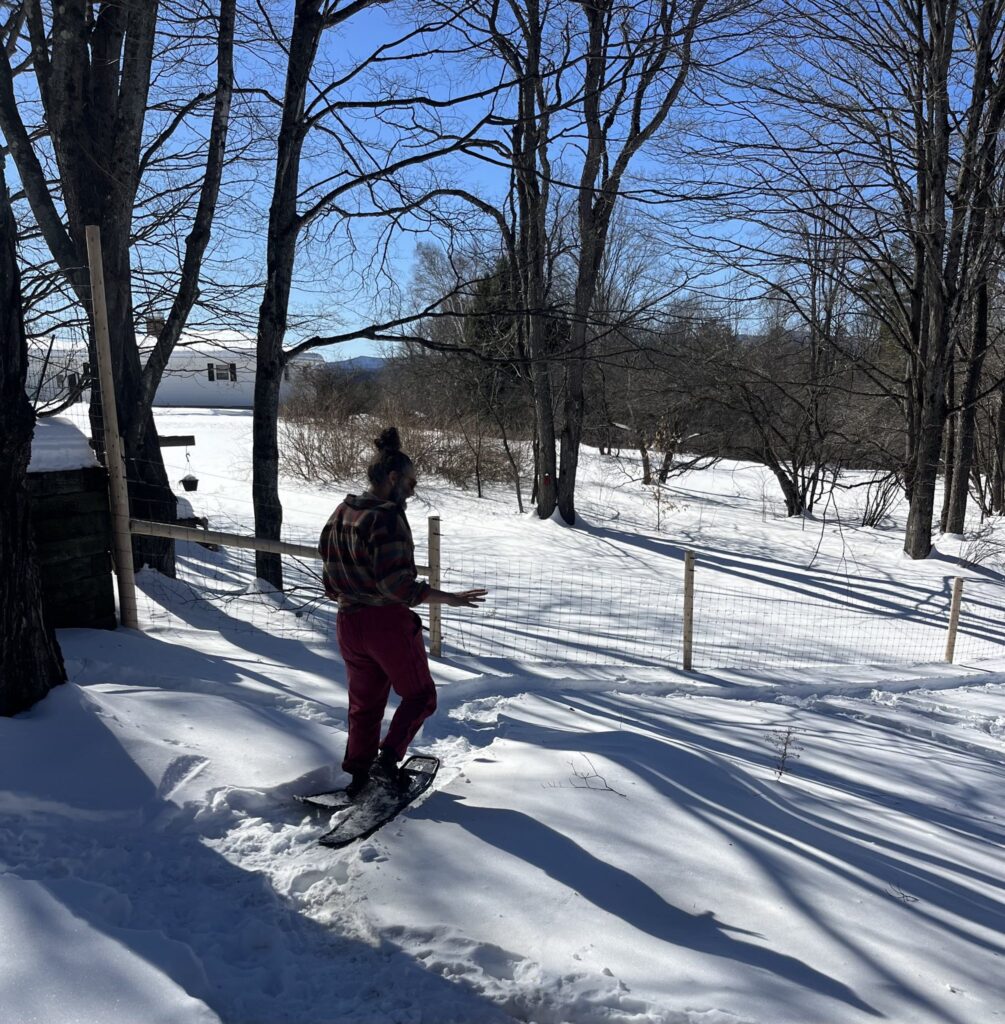
We have been saving seeds since 2015 and have selected for the outdoor growing traits we value: in-ground germination, uncovered for their lifecycle, long unrefrigerated shelf life, outstanding flavor and nutrition. In this way, we are trying to care for the gift of vegetables that can do these things already, and help adapt them to a rapidly deteriorating climate, allowing the strength of their genetic diversity, not their homogeneity, to guide us on the path to feeding future generations. The plants we eat at every meal are the craft of untold generations of individuals who wanted to share a meal with someone they would never meet, and so saved it in a seed for the future. One of our goals as farmers is to grow food in the ways people always have and still do, with maximum diversity, high density, and open-pollination—this will give us the most resilient plants in the long run. Our goal is not singular, and so neither are our crops or interests, and we are always searching for new and old ways to experience the bounty of this beautiful place. If that we had more hands and more mouths with which to catch and taste and rejoice.
We also believe that eating locally should not be limited to seasonal vegetables, but should also apply to the pantry, fridge, and freezer. We offer locally grown ingredients in all of our farm goods and prepared foods because we believe that we can break the dependency on corporately processed foods and relearn the culinary collage that is cooking regional cuisine. We think that smoked pumpkin butter makes a darn fine flatbread sauce, and that rhubarb’s tang belongs in barbecue. We also know that breaking the pattern of produce grown under plastic, with natural gas heaters, then shipped across one or two seas or continents is not an optimal plan, so why are we doing it? We strive to give you food that doesn’t just come from the same continent, it comes from our farm, or one of our friends from the market, or farther down our road, or it’s salt. We catch all the sugar we use in our products here on our farm from our sugar maples. We make the vinegar we use, and the chile powder, mushroom powder, and dried herb blend. We grow the beets we use to cure the pork our neighbors raised before we turn it into bacon. Monocropping, commodity markets, and globalization have all been keen tools for capitalism to undermine plant diversity, and therefore resilience. We aim to follow the plants in a direction that serves them best to show gratitude for their support of us, our neighbors, and our friends.
If you like what you’re hearing and want to try our favorite foods–which we think will rapidly become your favorite foods–we hope you’ll join us at a farmers market, sign up for our newsletter, or join our Fenmire Farm Kitchen Box, which harkens back to that first supper club in Denver.
Thanks for reading and we look forward to planting the seeds of the future together.
Jem and S.E. (and dogs and rabbits and cats and ducks and geese)